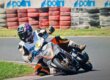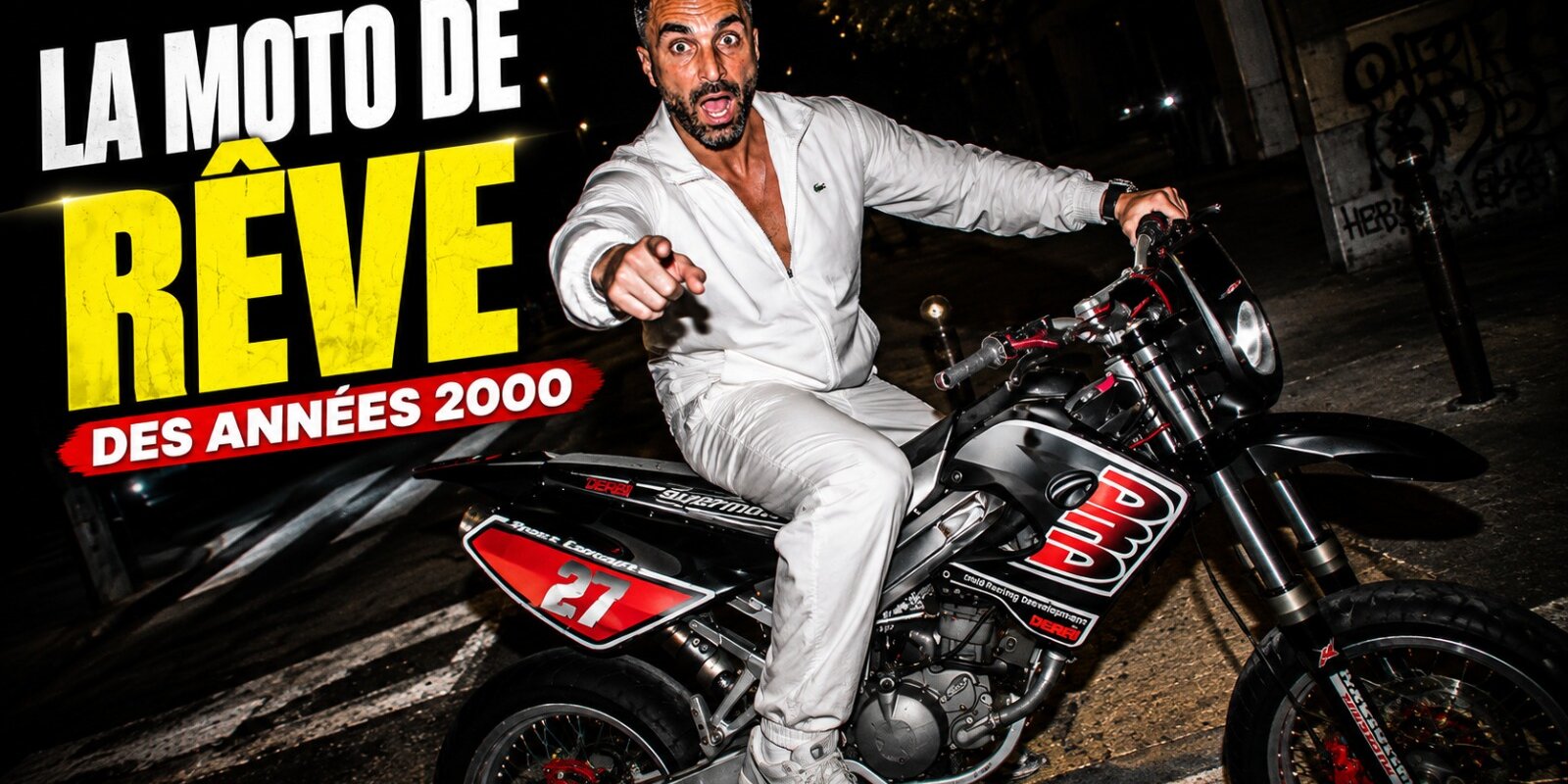
TL;DR: Roman’s Derbi DRD 03 is a 2003 50cc gearbox bike built entirely around a track and supermoto philosophy, putting out 27 horsepower on the dyno thanks to a Malossi MHR Team top-end and a GPR Euro 2 bottom-end — finished off with custom parts machined by the owner himself.
🏁 A childhood dream turned reality
Roman is 36 today, but it was at 14 that the Derbi DRD 03 first got under his skin. The sleek lines of this Spanish gearbox bike, its mini-GP stance, its sharp character: everything about it stuck with him. Years passed, the passion never faded, and after three years of relentless searching he finally tracked down the perfect base — an original chrome frame in solid condition, period fairings and the original seat, all rare finds on machines that typically lived hard lives on country tracks.
This is not a standard restoration. Roman wasn’t looking to freeze a stock bike in time: he wanted to build a machine with a track and supermoto soul, faithful to the model year in its mechanical choices but pushed well beyond its factory limits. The result is a total project, thought through to the last detail, where every single part was chosen or fabricated for a specific reason.
⚙️ The engine: from a GPR bottom-end to the Malossi MHR Team
The heart of the build is a Euro 2 bottom-end sourced from a Derbi GPR, fitted with its original balancer shaft. That choice is deliberate: Roman wanted to stay true to the machine’s 2003 model year without mixing engine generations. The Euro 2 bottom-end is a solid, well-documented base, and the balancer shaft keeps vibrations in check during hard high-rpm use.
For the top-end, the choice landed on the Malossi MHR Team cylinder kit for Derbi Euro 2, a timeless benchmark in 50cc gearbox tuning. This period cylinder was handed over to Mathieu Cotinaut at MC Préparation, who got everything it had to give: the bike came back with 27 horsepower on the dyno, an impressive figure for a 50cc base that speaks for the quality of the preparation work. A Stage6 clutch rounds out the assembly to handle the extra torque without breaking a sweat.
The drivetrain received the same attention. The Stage6 360° swivel intake manifold AM6/Derbi for PWK 19 to 28 mm carburettors optimises fuelling under load, and the 53-tooth 420 Stage6 CNC aluminium sprocket for Derbi DRD Pro fine-tunes the gearing to match the machine’s track character. Every link in the drivetrain was chosen so those 27 horsepower reach the wheels with no unnecessary loss.
🔧 A chassis shaped by a professional machinist
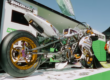
Roman is a machinist by trade, and it shows. Where most builders stop at catalogue parts, he fabricated and adapted a large number of components himself. The most representative example is the cooling system: a twin-radiator setup — the second unit sourced from a Honda CRF 150 — was cut, re-welded and mounted on rubber grommets to fit perfectly inside the DRD frame. That kind of adaptation demands a level of precision that only genuine machining expertise can deliver.
The chassis was fully reconditioned. The original Marzocchi Magnum fork — quality kit for its era — was reworked with custom bushings and heavier oil for sharper, more consistent handling. The rear shock was nitrogen-recharged to restore its original characteristics. These jobs are often skipped on this type of build, but they make a radical difference to how the machine behaves on track or on the road.
To complete the chassis, Roman fitted STR8 MX Evo rider footpegs for Derbi at the front and STR8 MX Evo passenger footpegs for Derbi at the rear — solid references that sit perfectly with the project’s supermoto direction. The Derbi Stage6 gearbox output sprocket cover protects and stiffens the transmission output point, a detail that matters when the horsepower is real.
🎨 Finish and rare period parts
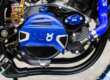
The same care given to the mechanics carries through to the finish. The engine cases were treated with a textured epoxy wrinkle paint, giving that immediately recognisable textured look found on vintage competition machines. The wheel hubs, rim hoops, triple clamps and fork lowers were all powder-coated, creating total visual consistency between the matte-black chassis components and the treated cases.
Among the period parts that make this build special, the Conti 28 mm handlebar clamp deserves a mention. That kind of accessory — hard to find in good condition — instantly places the machine in its historical context and serves as a reminder that Roman wasn’t purely chasing raw performance; he was also after the authenticity of an era when the 50cc gearbox bike ruled school gates and makeshift circuits alike.
📊 Build summary
| Component | Choice / Spec |
|---|---|
| Base | Derbi DRD 03 (2003) |
| Bottom-end | Euro 2 GPR with balancer shaft |
| Top-end | Malossi MHR Team — 27 hp on the dyno |
| Chassis | Reconditioned Marzocchi Magnum, custom bushings |
| Cooling | Twin radiator (CRF 150 adaptation) |
❓ FAQ
What is a Derbi DRD 03?
The Derbi DRD 03 is a 50cc gearbox bike produced by Spanish manufacturer Derbi in 2003, aimed at the track and young riders. It stands out for its perimeter frame, Marzocchi fork and competition-inspired bodywork. Today, clean examples have become rare and are actively sought after by collectors and builders alike.
How much horsepower can a tuned 50cc gearbox bike make?
A 50cc gearbox bike built by a specialist can exceed 25 horsepower on the dyno, as Roman’s Derbi DRD 03 proves with its 27 hp achieved through the Malossi MHR Team kit and MC Préparation’s work. The result depends on the quality of the bottom-end, the top-end chosen, the carburation and the care put into the assembly.
Which cylinder kit should I choose for a Derbi Euro 2?
The Malossi MHR Team is one of the historic go-to references for Derbi Euro 2 engines. It offers an excellent balance of power, reliability and compatibility with a stock bottom-end. Other kits exist on the market, but the MHR Team remains the choice of many builders for its parts availability and high tuning potential.
How long does it take to build a gearbox bike at this level?
Roman’s project took three years, between tracking down a solid base in good condition and fabricating or adapting numerous custom parts. A build at this level — combining engine preparation entrusted to a specialist with custom chassis machining — is hard to complete in under several hundred hours of work, depending on the skills and equipment available.
Why choose a GPR Euro 2 bottom-end for a DRD 03?
The GPR Euro 2 bottom-end with balancer shaft is compatible with the DRD 03’s engine generation and keeps the build consistent with the machine’s model year. The balancer shaft reduces vibrations at high rpm — a real advantage for intensive track use — and it is a well-known base among builders, which makes sourcing parts straightforward.
💚 Discover more incredible builds and prepared machines on the Maxiscoot channel!